
An accident with an 18-wheeler is never minor. These massive trucks can weigh up to 80,000 pounds, and when they collide with passenger vehicles, the results are often devastating: severe injuries, lifelong disabilities, or even wrongful death. Victims and families are left facing crushing medical bills, weeks or months of lost income, and an uphill battle with trucking companies and their insurers.
In Virginia, recovering compensation after an 18-wheeler crash is uniquely complex. The state’s contributory negligence rule can bar recovery if you’re found even 1% at fault. Trucking companies are backed by powerful insurers and teams of attorneys whose goal is to minimize payouts. That’s why having an experienced 18-wheeler truck accident injury lawyer in Virginia is not just helpful , it’s essential.
This guide breaks down what makes 18-wheeler cases different, the average settlement ranges, how liability is proven, and why hiring a skilled lawyer can dramatically increase your chances of securing full and fair compensation.
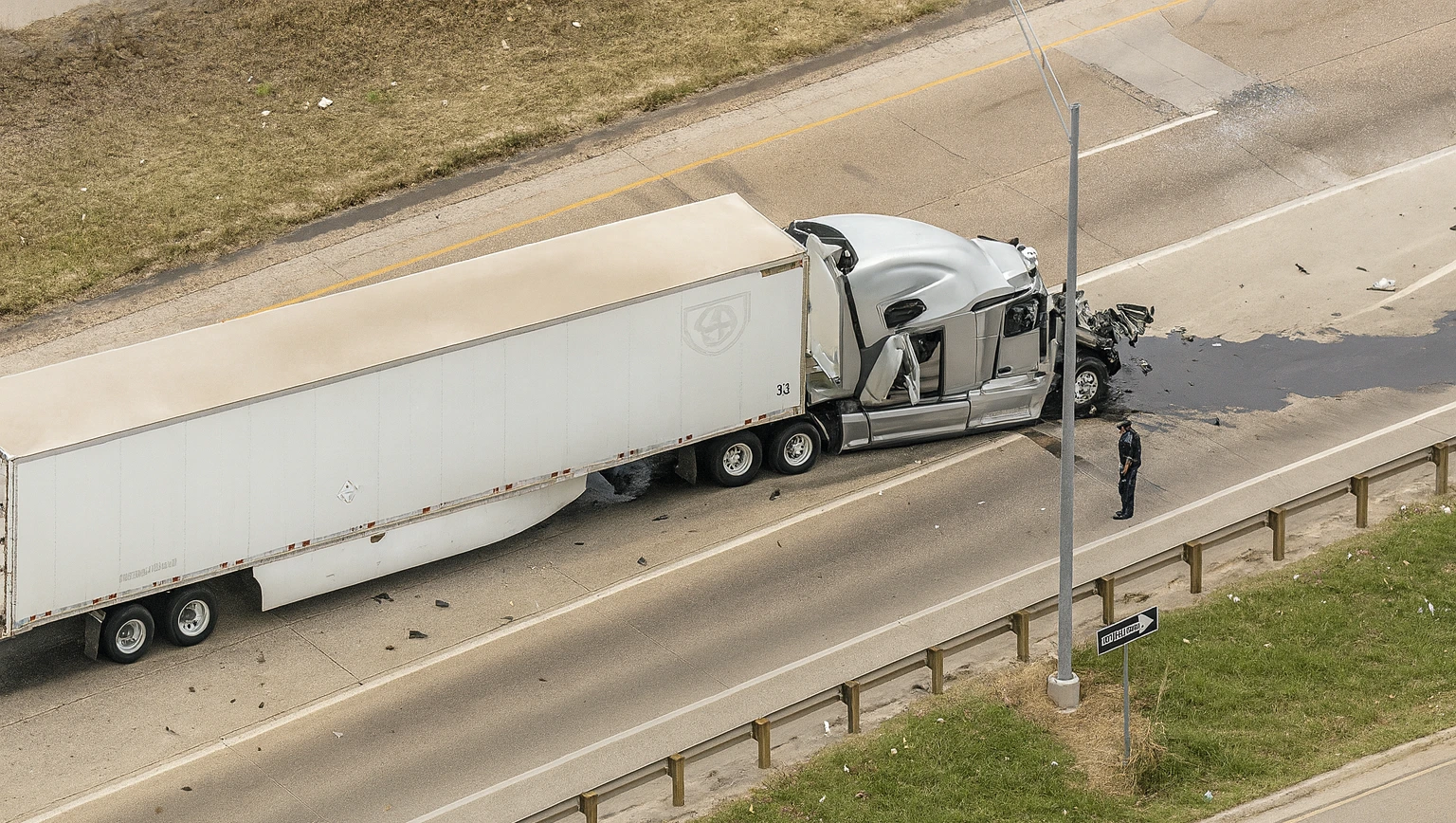
Table of Contents
- Why 18-Wheeler Accidents Are Different From Car Accidents
- Virginia Law and Liability in Truck Accidents
- Common Injuries in 18-Wheeler Accidents
- Average Settlement Ranges for 18-Wheeler Accidents in Virginia
- Factors That Influence Settlement Value
- How the Settlement Process Works
- Why an 18-Wheeler Truck Accident Injury Lawyer Matters
- Wrongful Death in 18-Wheeler Cases
- Practical Steps for Victims and Families After an Accident
- Frequently Asked Questions
- Conclusion & Call to Action
Why 18-Wheeler Accidents Are Different From Car Accidents
18-wheeler accidents dwarf passenger car collisions in scale and consequence due to their massive size, up to 80,000 pounds versus a car’s 4,000. This weight disparity, combined with longer stopping distances (up to 600 feet at highway speeds), amplifies destruction. Common causes include driver fatigue from violating hours-of-service rules, speeding, unsecured cargo shifting balance, and mechanical failures like brake malfunctions, which account for 30% of crashes per Virginia DMV data. Driver errors, such as distracted driving, contribute to 55% of incidents.
Injuries are far graver than in car accidents: traumatic brain injuries (TBIs), spinal cord damage, or fatalities are common, compared to sprains in typical crashes. Medical costs can soar past $500,000, with emotional trauma like PTSD affecting 30% of survivors. Settlements and jury awards are higher, often $100,000-$5 million, due to severe damages, commercial insurance policies with $750,000-$5 million limits, and potential corporate liability from trucking firms or manufacturers. These factors make 18-wheeler cases uniquely high-stakes, requiring specialized legal navigation to secure justice.
Virginia Law and Liability in Truck Accidents
Virginia’s legal framework for 18-wheeler accidents is stringent, blending state and federal regulations. The state’s pure contributory negligence rule bars recovery if the victim is even 1% at fault, a standard shared by only four states. For example, a 2024 Fairfax case denied a $200,000 claim due to a minor signaling error. Federal Motor Carrier Safety Administration (FMCSA) regulations mandate 11-hour driving limits, electronic logging devices (ELDs), and annual inspections. Virginia reinforces these with weight restrictions (20,000 pounds per axle) and mandatory accident reporting for damages over $1,500 or injuries (Code § 46.2-894). The statute of limitations for personal injury and wrongful death is two years (§ 8.01-243), creating a tight filing window. FMCSA violations, like falsified logs, can establish negligence per se, strengthening claims. However, proving sole liability in Virginia’s unforgiving system requires robust evidence, black-box data, maintenance logs, or witness testimony, making legal expertise essential to avoid claim derailment.
Common Injuries in 18-Wheeler Accidents
18-wheeler accidents inflict devastating injuries due to the vehicles’ size and force. Traumatic brain injuries (TBIs), ranging from concussions to severe cognitive impairment, affect 20% of victims, costing $100,000-$1 million in treatment. Spinal cord injuries, often leading to partial or full paralysis, require lifelong care, with first-year costs averaging $1.2 million. Broken bones, such as compound fractures, and internal organ damage, like ruptured spleens, demand surgeries ($50,000-$200,000) and extended recovery. Wrongful death cases, tragically common in underride collisions, leave families grappling with loss. Long-term rehabilitation, physical therapy, neurological care, or psychological support for PTSD, can span years, adding $200,000-$500,000 to claims. A 2025 Roanoke case involving a TBI settled for $800,000, reflecting these costs. These injuries necessitate comprehensive medical documentation to secure settlements that cover both immediate and future needs, underscoring the importance of legal advocacy.
Average Settlement Ranges for 18-Wheeler Accidents in Virginia
No fixed “average” settlement exists for 18-wheeler accidents due to case-specific variables, but ranges offer insight. Moderate injuries, like fractures or whiplash, typically settle for $100,000-$250,000, covering medical bills and short-term wage loss. Severe injuries, such as TBIs or spinal damage, range from $500,000-$1 million+, factoring in surgeries and lost earning capacity. Wrongful death or catastrophic cases often exceed $1 million, with some reaching $5 million+, driven by lifelong care or loss of companionship.
A 2024 Norfolk case settled for $600,000 after ELD data proved driver fatigue, while a 2025 Fairfax wrongful death suit yielded $3.5 million for a multi-vehicle crash. Nationally, a 2023 California case hit $7 million for a fatal pileup, mirroring Virginia’s trends. Key drivers include liability proof (black-box data, maintenance records), insurance coverage ($750,000-$5 million), and damages evidence. Virginia’s contributory negligence rule demands airtight liability to avoid nullified claims, making robust documentation critical for maximizing settlement value.
Factors That Influence Settlement Value
Settlement values for 18-wheeler accidents hinge on multiple factors, each shaping the final payout.
Medical Expenses and Future Care Costs
Injuries drive costs: ER visits ($5,000-$10,000), surgeries like spinal fusion ($100,000-$250,000), and lifelong care for paralysis ($1 million+). Future care, projected by medical experts, can double settlements, especially for TBIs requiring ongoing therapy.
Lost Income and Reduced Earning Capacity
Victims often face months or permanent disability, with lost wages based on Virginia’s $62,000 median income. Permanent disability claims, verified by vocational experts, add $500,000-$2 million for younger victims, reflecting career loss.
Pain, Suffering, and Emotional Trauma
Non-economic damages, like PTSD or loss of enjoyment, use multipliers (1.5-5x medical costs) or per diem ($200/day). A $50,000 medical bill could yield $75,000-$250,000 in pain and suffering, depending on trauma severity.
Property Damage and Vehicle Replacement
Totaled vehicles cost $25,000-$40,000 to replace, with diminished value adding $1,000-$5,000 for repairable cars. Detailed appraisals ensure full recovery.
Strength of Liability Evidence
Black-box data, ELDs, or maintenance records proving negligence, like a 2025 Roanoke case ($700,000 for brake failure), strengthen claims. Weak evidence risks contributory negligence denials.
Number of Defendants
Liability may span drivers, trucking companies, manufacturers, or cargo loaders. A 2024 Richmond case split $1.5 million among a driver and manufacturer, maximizing recovery.
Insurance Policy Limits
Commercial policies ($750,000-$5 million) enable larger payouts than car policies ($25,000). Excess policies or corporate assets boost high-value claims, but underinsured drivers cap recovery.
Insurance Company and Trucking Company Tactics
FMCSA mandates $750,000-$5 million liability coverage for 18-wheelers, but insurers use tactics to minimize payouts: quick lowball offers ($50,000 on a $300,000 claim), delaying investigations, or denying injury severity. Trucking companies, facing corporate liability, deploy defense teams to exploit Virginia’s contributory negligence rule, often alleging victim fault. Recorded statements can be weaponized to reduce claims. A 2025 Alexandria case saw a six-month delay until ELD evidence forced a $550,000 offer. Early legal representation counters these strategies, ensuring victims aren’t pressured into unfair settlements and preserving evidence critical to proving liability.

How the Settlement Process Works
The process begins with an investigation (1-3 months): collecting police reports, medical records, and evidence like ELDs or black-box data. Filing a claim with the at-fault insurer follows, requiring repair estimates and treatment records. Negotiations (2-4 months) involve initial offers, counteroffers backed by demand letters, and mediation for disputes. Most cases settle pre-trial, with funds disbursed 7-14 days post-agreement. Litigation, if needed, extends timelines to 12-24 months under Virginia’s two-year statute. A 2024 Chesapeake claim settled in 11 months for $250,000, while a contested Fairfax case took 20 months. Prompt evidence submission and legal coordination accelerate fair resolutions.
Why an 18-Wheeler Truck Accident Injury Lawyer Matters
An 18-wheeler accident lawyer is indispensable, wielding FMCSA expertise and Virginia law fluency. They recover critical evidence, black-box data, ELDs, maintenance logs, via subpoenas, as in a 2025 Fairfax case where log violations boosted a $400,000 offer to $950,000. They identify multiple liable parties (drivers, companies, manufacturers), maximizing recovery sources. Negotiating against corporate insurers, attorneys counter lowballs with comprehensive demand letters, securing 30-50% higher settlements. They leverage experts, medical, vocational, economic, to build damages portfolios, projecting future costs like $1 million for lifelong care. Trial preparation for Virginia’s bench trials pressures insurers, as seen in a 2024 Richmond $1.3 million pre-trial settlement. Specialized experience matters: lawyers with trucking case histories navigate complexities, ensuring optimal outcomes without upfront costs (contingency fees, typically 33%).
Wrongful Death in 18-Wheeler Cases
Wrongful death claims address unique damages: funeral costs ($10,000-$20,000), lost financial support (based on decedent’s earnings), and loss of companionship ($100,000-$500,000). Virginia juries, sympathetic to families, award $1 million-$5 million+, as in a 2025 Fairfax case yielding $3.5 million for a fatal underride crash. Higher awards stem from egregious negligence, like impaired driving (BAC limit: 0.04%). Proving dependency and emotional loss requires expert testimony, making legal representation critical to secure comprehensive recovery for grieving families.
Practical Steps for Victims and Families After an Accident
Seek medical care immediately, even for minor symptoms, to document injuries like concussions. Report the accident to police for an official report (§ 46.2-894) and document everything: photos, medical bills, wage losses. Avoid insurer statements, as they can trigger contributory negligence denials. Preserve evidence, black-box data, ELDs, by requesting records promptly, as companies may destroy them. Contact a truck accident lawyer early, choosing one with FMCSA expertise and trial history. These steps strengthen claims and expedite fair compensation.
Frequently Asked Questions
What should I do immediately after an 18-wheeler accident in Virginia?
Seek medical care, report the accident, document the scene (photos, witnesses), and contact a lawyer before speaking to insurers.
How long do I have to file a lawsuit?
Virginia’s statute of limitations is two years for personal injury and wrongful death (§ 8.01-243).
Can I recover damages if the truck driver was uninsured?
Uninsured motorist coverage or claims against the trucking company’s assets may apply, but legal advice is essential.
How much is my case worth?
Moderate injuries: $100,000-$250,000; severe: $500,000-$1 million+; wrongful death: $1 million-$5 million+, depending on damages and liability.
Will my case go to trial or settle out of court?
Most (90%) settle pre-trial within 12-24 months; high-value cases may go to trial for larger verdicts.
What if the accident caused the death of a loved one?
Wrongful death claims cover funeral costs, lost income, and companionship, often reaching $1 million-$5 million.
Do I have to pay my lawyer upfront?
No, most truck accident lawyers work on contingency (33% of settlement), with no upfront costs.

Conclusion & Call to Action
18-wheeler accidents in Virginia are high-stakes battles, with settlements from $100,000 to over $5 million reflecting severe injuries and complex liability. Virginia’s contributory negligence rule and FMCSA regulations demand precision to secure full recovery for medical, financial, and emotional losses. From black-box evidence to expert testimony, every detail shapes your outcome. Victims need robust representation to counter corporate insurers and trucking companies. If you or your loved one has been injured in an 18-wheeler accident in Virginia, don’t face trucking companies and insurers alone. Contact a dedicated Virginia truck accident injury lawyer today for a free consultation.
Latest Posts
Comparative vs. Contributory Negligence in Virginia: How Fault Affects Your Personal Injury Claim
Fault matters, especially in a Virginia personal injury case. Even if another driver, property owner, or company was mostly responsible for your injuries,...
Lost Wages After a Car Accident in Virginia: What You Need to Know
A serious car accident can leave you with more than physical pain. For many Virginians, the financial fallout begins almost immediately, missed workdays,...