

Table of Contents
- Why Commercial Truck Accidents Demand Special Attention
- The Stakes: What Victims Really Face
- Who Can Be Held Liable in a Commercial Truck Accident?
- Virginia’s Tough Legal Landscape
- How Insurance Really Works in Commercial Truck Cases
- What Makes Settlements So Variable?
- How Attorneys Build Strong Cases Against Trucking Companies
- Wrongful Death and Commercial Trucks
- Practical Advice for Victims and Families
- Frequently Asked Questions
- Conclusion & Call to Action
Why Commercial Truck Accidents Demand Special Attention
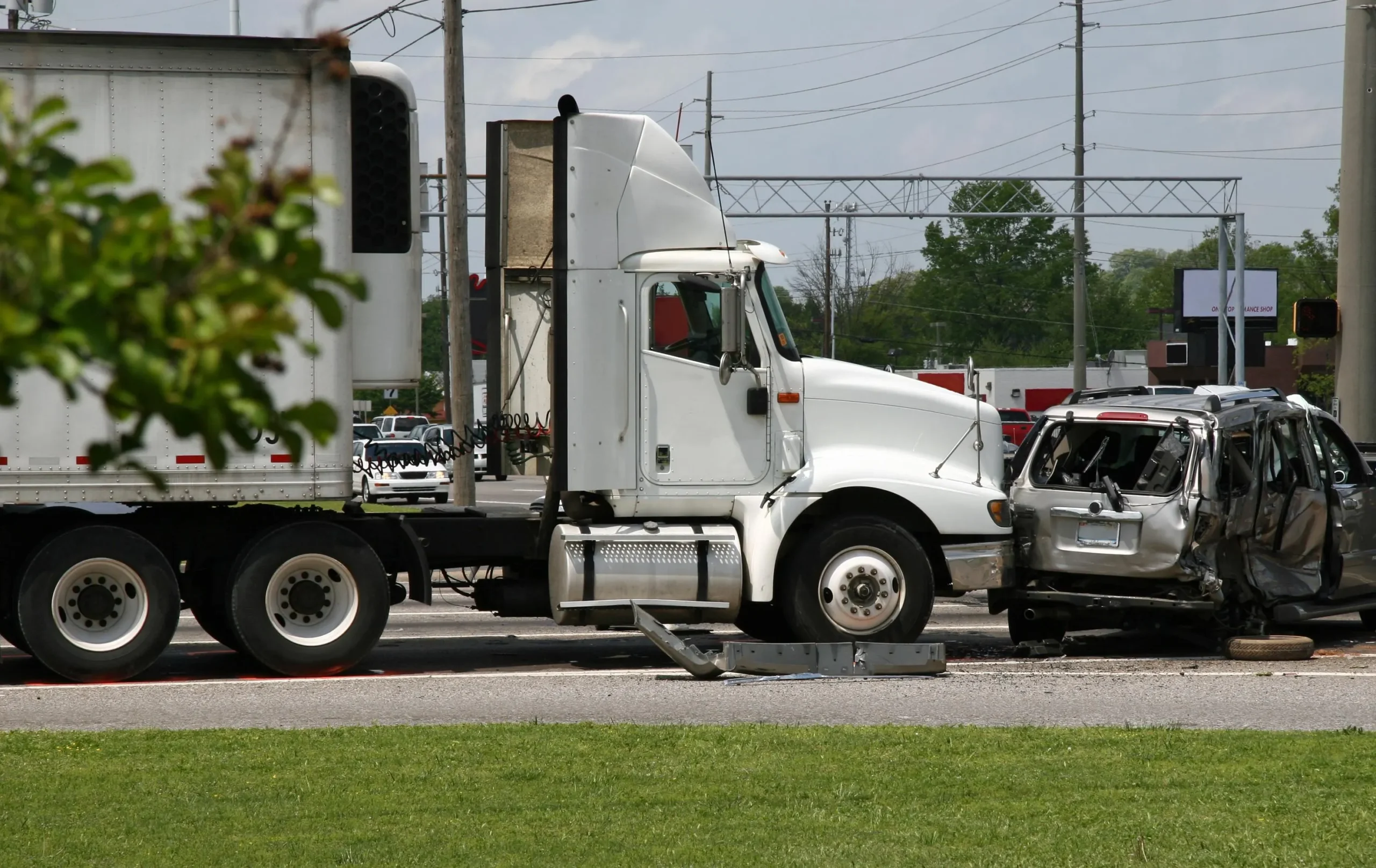
Commercial trucks, encompassing delivery vans, dump trucks, and fleet vehicles like FedEx or Amazon rigs, differ from 18-wheelers in scope but not in danger. Weighing 10,000 to 80,000 pounds, they dwarf cars, requiring longer stopping distances (up to 600 feet at 60 mph). Virginia’s roads amplify risks: urban congestion in Richmond and Norfolk clogs traffic, while interstates like I-81 and I-95 see high-speed collisions. Per DMV data, 55% of crashes stem from driver error (fatigue, distraction), 30% from mechanical failures (brakes, tires).
These accidents are legally complex due to multiple liable parties, drivers, companies, manufacturers, and federal regulations like FMCSA’s hours-of-service rules. Financially, settlements soar higher than car crashes ($10,000-$50,000) because of severe injuries, like TBIs, and commercial policies with $750,000-$5 million limits. A 2024 Norfolk delivery van crash settled for $300,000, triple a similar car accident, due to corporate liability. These cases demand specialized attorneys to unravel regulatory and corporate defenses, ensuring victims secure deserved compensation.
The Stakes: What Victims Really Face
Beyond the Hospital Room
Commercial truck accidents inflict profound losses. Medical bills for fractures or spinal injuries can hit $500,000, while rehabilitation stretches years. Lost earning potential devastates families, especially for young victims facing permanent disability, Virginia’s median income ($62,000/year) compounds losses over decades. Family stress escalates as caregivers juggle work and recovery support.
Emotional Scars Run Deep
Emotional trauma, like PTSD (affecting 30% of survivors), lingers long after physical healing. Victims report anxiety from driving or flashbacks to the crash’s chaos. A 2025 Roanoke case saw a victim awarded $200,000 for emotional distress atop medical costs.
Car Crashes Pale in Comparison
Unlike car accidents, commercial truck cases involve higher damages and corporate defendants. A 2024 Richmond car crash settled for $25,000 for whiplash, while a similar truck crash yielded $400,000 due to a TBI and company negligence. The stakes, medical, financial, emotional, demand aggressive legal advocacy to secure life-changing compensation.
Who Can Be Held Liable in a Commercial Truck Accident?
Liability in commercial truck accidents extends beyond the driver, amplifying settlement potential. Trucking companies face scrutiny for negligent hiring, inadequate training, or pushing drivers beyond FMCSA’s 11-hour driving limit. A 2024 Chesapeake case pinned $500,000 on a company for skipping background checks. Contractors and fleet operators, like those managing delivery vans, share liability for lax oversight. Cargo loaders can be culpable for unsecured loads, as in a 2025 Fairfax crash where shifting cargo caused a $700,000 settlement. Vehicle or parts manufacturers face claims for defective brakes or tires, 30% of crashes involve equipment failure, per DMV data. Identifying all parties is critical: a 2024 Richmond multi-defendant case split $1.8 million among a driver, company, and manufacturer. Comprehensive liability probes, using ELDs and maintenance logs, maximize recovery, as missing a defendant can slash settlements by 50% or more in Virginia’s high-stakes legal arena.
Virginia’s Tough Legal Landscape
The Contributory Negligence Trap
Virginia’s pure contributory negligence rule is a brutal hurdle: even 1% victim fault, like a late signal, bars all recovery. A 2024 Fairfax case nullified a $250,000 claim over a minor lane-change error. This rule, shared by only four states, demands airtight liability proof.
Time Is Ticking
The two-year statute of limitations for personal injury and wrongful death (§ 8.01-243) sets a firm deadline. Missing it forfeits claims, no matter the damages.
Virginia vs. Neighbors
Unlike Maryland’s no-fault system, which covers initial damages regardless of blame, or North Carolina’s modified comparative negligence, allowing partial recovery, Virginia’s all-or-nothing approach heightens stakes. This contrasts with regional leniency, making legal missteps costlier.
Federal Overlay
FMCSA regulations, mandating ELDs, annual inspections, and 10-hour rest periods, overlay Virginia’s laws (weight limits, accident reports for $1,500+ damages; Code § 46.2-894). Violations, like falsified logs, trigger negligence per se, as in a 2025 Norfolk $600,000 settlement. Navigating this dual framework requires expertise to avoid pitfalls and leverage regulations for maximum compensation.
How Insurance Really Works in Commercial Truck Cases
Robust Coverage, Aggressive Defenses
FMCSA mandates $750,000-$5 million liability coverage for commercial trucks, far exceeding Virginia’s $25,000 car minimum. Fleet operators often carry excess policies, enabling multimillion-dollar payouts. However, insurers deploy tactics like lowball offers ($50,000 for a $400,000 claim) or delaying investigations to pressure victims. A 2025 Alexandria case saw a six-month stall until ELD evidence forced a $650,000 offer.
Blame-Shifting and Evidence Contr
Insurers exploit Virginia’s contributory negligence rule, alleging victim fault to deny claims. They may control evidence, like black-box data, if not promptly secured. Quick settlements aim to undercut damages before full medical costs emerge.
Lawyer as Equalizer
Attorneys uncover hidden coverage, umbrella policies or corporate assets, and counter insurer tactics. In a 2024 Richmond case, a lawyer’s policy probe raised a settlement from $200,000 to $1.2 million by tapping excess coverage. Legal expertise ensures victims aren’t shortchanged by corporate defenses.
What Makes Settlements So Variable?
Injury Severity and Long-Term Impact
Settlement values hinge on injury extent: short-term fractures ($50,000-$100,000) versus catastrophic TBIs requiring lifelong care ($1 million+). Permanent disabilities amplify claims, especially for high earners.
Victim’s Employment Background
A young professional’s lost earning capacity, calculated from Virginia’s $62,000 median income, can add $500,000-$2 million. A 2025 Roanoke teacher’s claim included $800,000 for career loss.
Multiple Defendants
Cases with multiple liable parties (driver, company, manufacturer) yield higher payouts. A 2024 Richmond multi-defendant crash split $1.5 million, versus $200,000 for a single-driver case.
Scenario Examples
Minor Injury: A delivery van rear-ends a car, causing whiplash. Settlement: $150,000 (medical, short-term wages).
Severe Injury: A dump truck T-bones a sedan, causing a TBI. Settlement: $900,000 (surgeries, lost career).
Wrongful Death: A fleet vehicle causes a fatal pileup. Settlement: $3.2 million (funeral, lost income, companionship).
Liability proof (ELDs, black-box data) and damages evidence drive variability, demanding meticulous case-building.
How Attorneys Build Strong Cases Against Trucking Companies
Forensic Precision at the Scene
Attorneys deploy accident reconstructionists to analyze skid marks, crash angles, and scene photos, pinpointing fault. A 2025 Fairfax case used reconstruction to prove a $700,000 brake-failure claim.
Unlocking Black-Box Secrets
Black-box (ECM) data reveals speed, braking, and driver actions. Subpoenaing this data, as in a 2024 Norfolk $600,000 settlement, exposed speeding, shifting liability.
Digging into Logs and Records
Subpoenaed driver logs and maintenance records uncover FMCSA violations, like a 2025 Roanoke case where falsified logs yielded $850,000. Maintenance lapses (30% of crashes) are goldmines for negligence claims.
Expert Witnesses as Pillars
Medical experts validate injuries, vocational experts quantify lost earnings, and economists project future costs. A 2024 Richmond TBI case used experts to secure $1.3 million, including $500,000 for future care.
Trial-Ready Leverage
Preparing for Virginia’s bench trials, where judges favor evidence, pressures insurers to settle. A 2025 Alexandria case settled pre-trial for $1 million after trial prep exposed company negligence. Specialized attorneys ensure robust cases, maximizing settlements without upfront costs.
Wrongful Death and Commercial Trucks
Wrongful death claims in commercial truck accidents cover funeral costs ($10,000-$20,000), lost financial support (based on decedent’s earnings), and companionship losses ($100,000-$500,000). Virginia courts view corporate negligence harshly, as in a 2025 Fairfax fatal crash yielding $3.5 million for a breadwinner’s death due to an overloaded truck. Settlements often reach $1 million-$5 million+, driven by egregious violations like impaired driving (BAC limit: 0.04%). Expert testimony quantifies emotional and financial impacts, making legal representation vital to secure comprehensive recovery for grieving families.
Practical Advice for Victims and Families
Act Swiftly, Document Thoroughly
Seek medical care immediately to document injuries, even minor ones like concussions. Report the accident to police (§ 46.2-894) and collect photos, witness contacts, and medical bills. A 2024 Chesapeake victim’s photos boosted a $300,000 settlement.
Avoid Costly Mistakes
Don’t speak to insurers without a lawyer, statements can trigger contributory negligence denials. Avoid social media posts about the crash, as insurers monitor them. Delaying legal help risks evidence loss, like black-box data overwritten within 30 days.
Timing Is Critical
Preserve ELDs and maintenance records promptly, as companies may destroy them. Early attorney involvement ensures evidence security and strengthens claims, expediting fair compensation.
Frequently Asked Questions
Do different rules apply to delivery trucks vs. semis?
FMCSA regulations apply to all commercial trucks over 10,000 pounds, but delivery vans may involve local fleet policies, complicating liability.
What if the truck was owned by a government agency?
Government-owned trucks face sovereign immunity, limiting claims unless negligence is clear. Legal expertise is crucial to navigate exceptions.
Can I sue both the driver and the company?
Yes, drivers and companies (for negligent hiring or maintenance) are often co-defendants, increasing settlement potential, as in a 2024 Richmond $1.5 million case.
What happens if the driver was an independent contractor?
Contractors complicate liability, but companies may still be liable for oversight failures. Attorneys uncover these relationships to maximize recovery.
How long does a commercial truck case usually take?
Non-injury cases settle in 6-12 months; injury cases take 12-24 months, awaiting medical stabilization. Litigation extends to 18-36 months.
Will my case settle or go to trial?
Most (90%) settle pre-trial; high-value cases ($1 million+) may go to trial for larger verdicts, as in a 2025 Roanoke $2.8 million award.
Conclusion & Call to Action
Commercial truck accidents in Virginia are high-stakes battles, with settlements reflecting severe injuries and complex liability. Virginia’s contributory negligence rule and FMCSA regulations demand precision to secure recovery for medical, financial, and emotional losses. From black-box data to expert testimony, every detail shapes your outcome. Don’t face corporate insurers and trucking companies alone, an experienced attorney can amplify your claim.
If you or a loved one was injured in a commercial truck accident in Virginia, contact an experienced attorney today for a free consultation.
Latest Posts
Comparative vs. Contributory Negligence in Virginia: How Fault Affects Your Personal Injury Claim
Fault matters, especially in a Virginia personal injury case. Even if another driver, property owner, or company was mostly responsible for your injuries,...
Lost Wages After a Car Accident in Virginia: What You Need to Know
A serious car accident can leave you with more than physical pain. For many Virginians, the financial fallout begins almost immediately, missed workdays,...